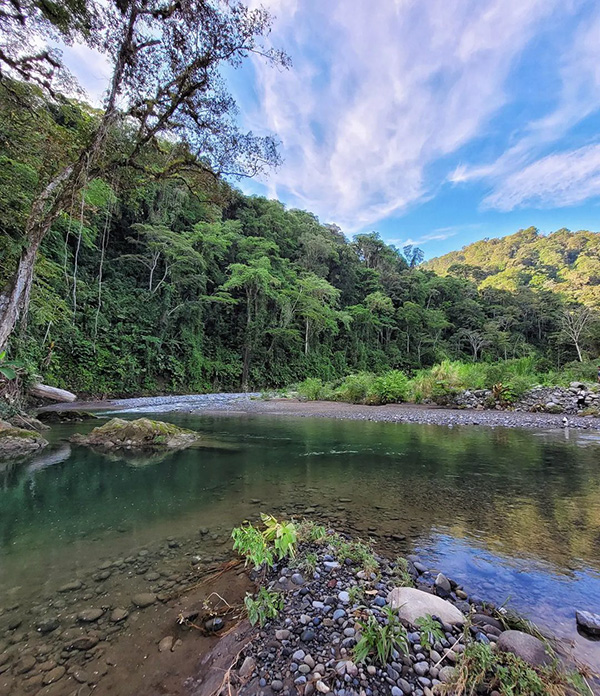
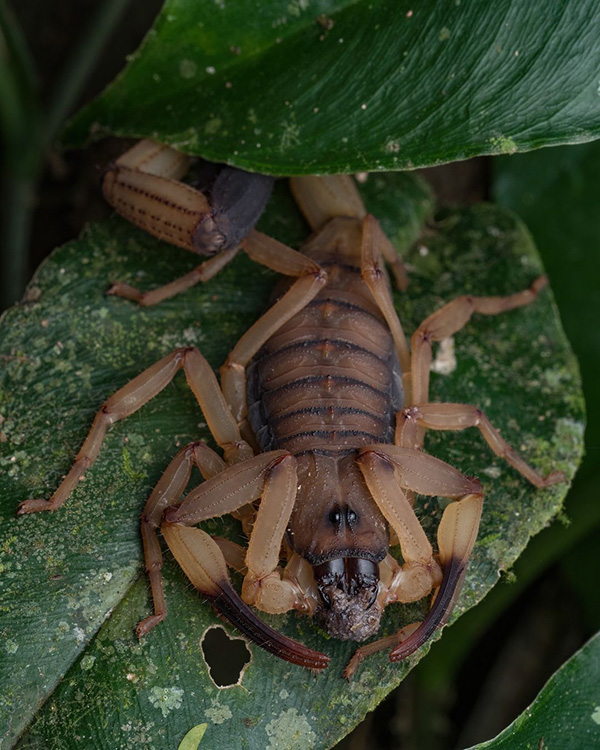
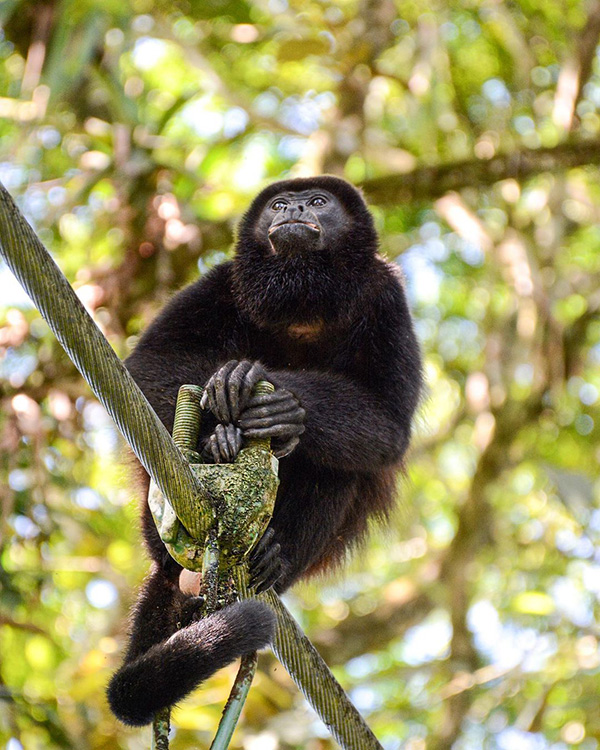
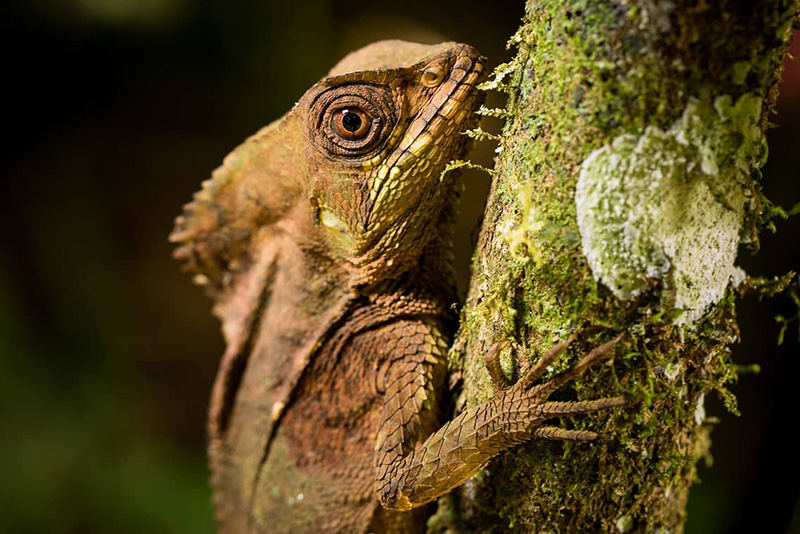
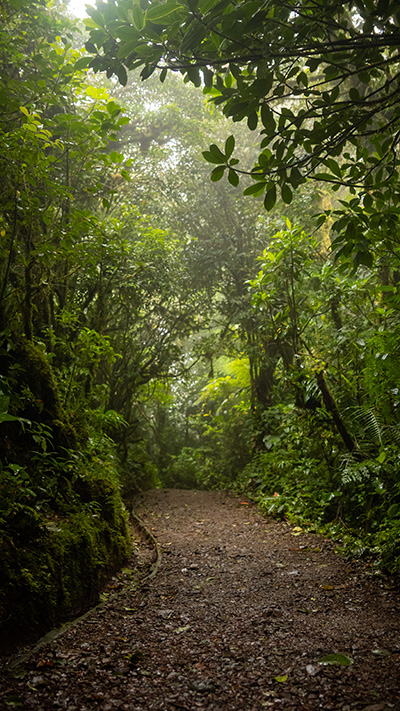
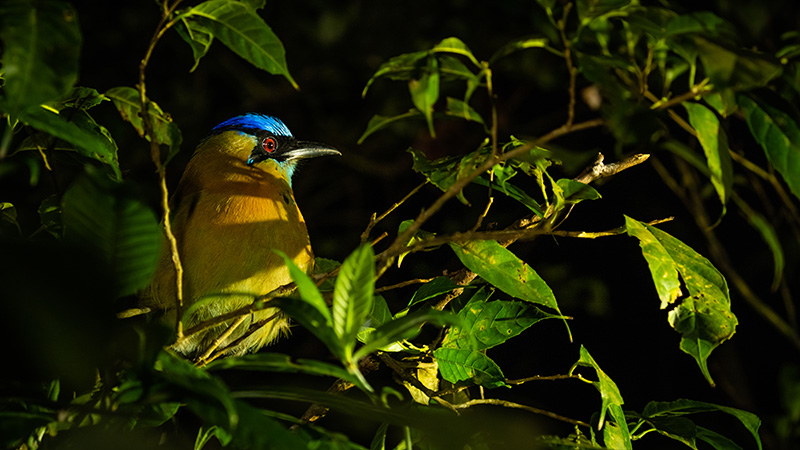
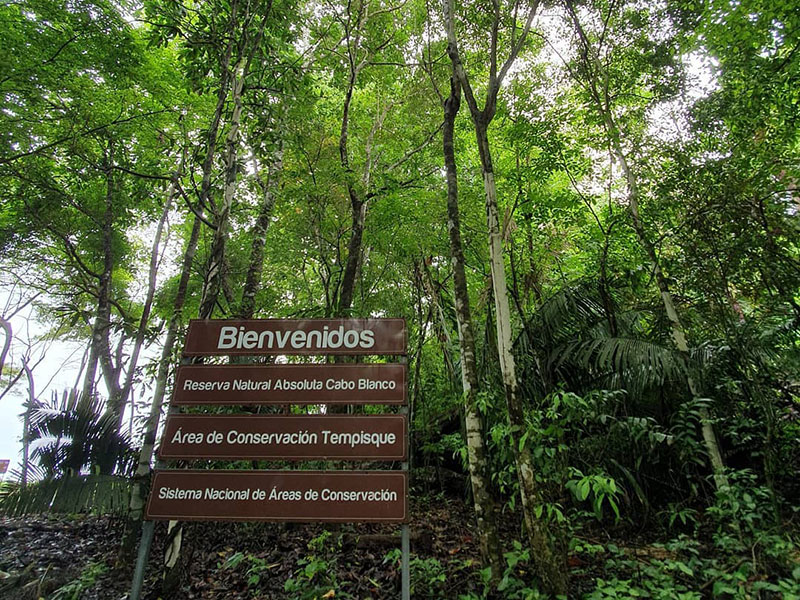
Without a doubt, our country’s southern region is full of natural riches and spots that are worth exploring, one of which is the Golfo Dulce Reserve. It was created to protect the forested lowlands that surround the gulf. It also borders national parks such as Corcovado National Park, known for its incredible biodiversity, and the smaller Peñas Blancas National Park. The reserve extends over more than 149,500 hectares.

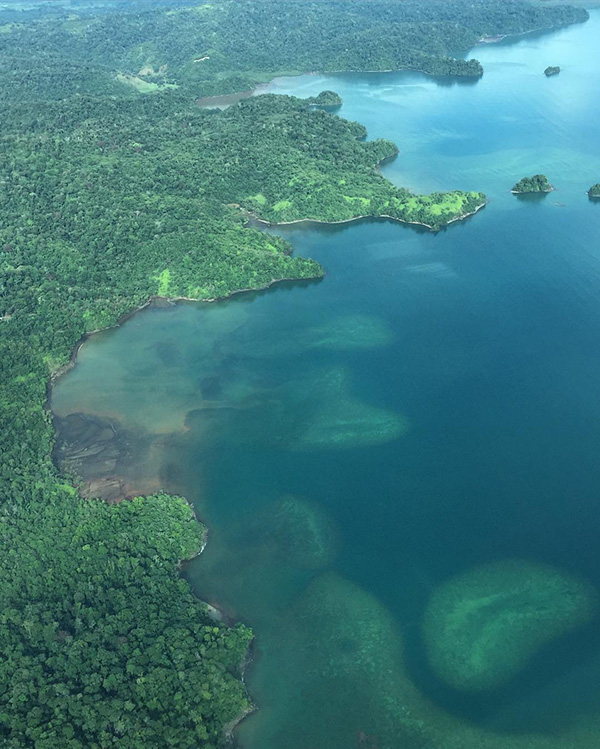
A large body of water surrounded by lush green trees.

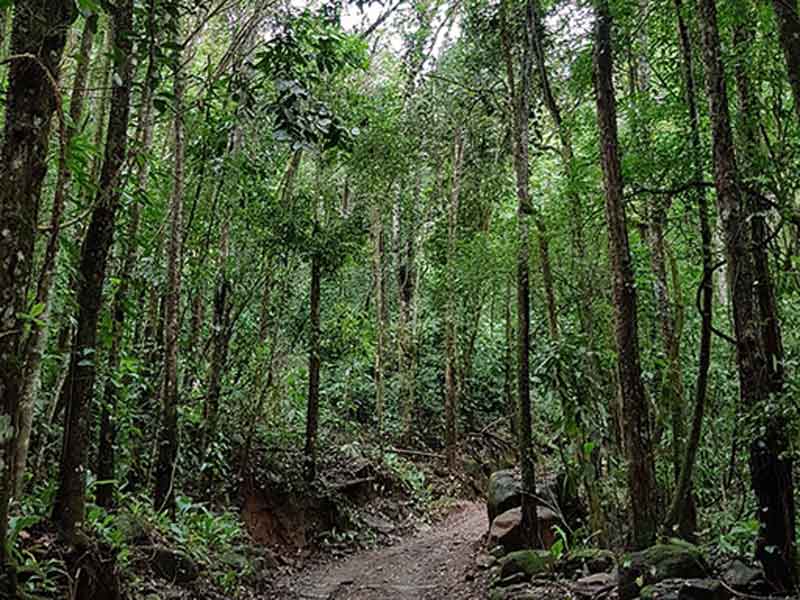
Since it is one of the country’s wettest regions, with over 200 inches of rain every year, the Golfo Dulce Forest Reserve has some of Costa Rica’s highest and oldest trees, some reaching to 30 or 40 meters in height. Known for its biodiversity, this region is ideal for nature lovers and adventure seekers, with a wealth of activities for both.

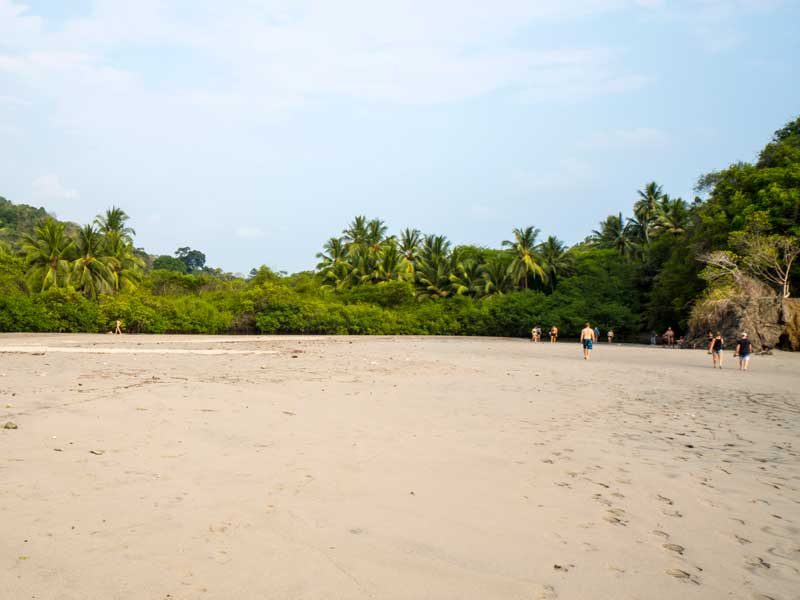
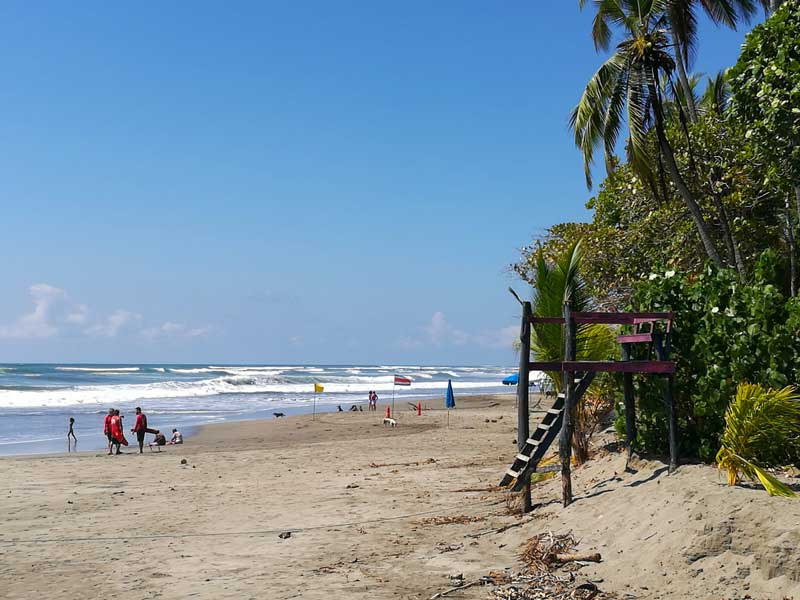
Golfo Dulce is a great place for birdwatching or just relaxing along one of its solitary beaches. With abundant swimming and hiking options, it offers travelers plenty of ways to see its wealth of fauna.

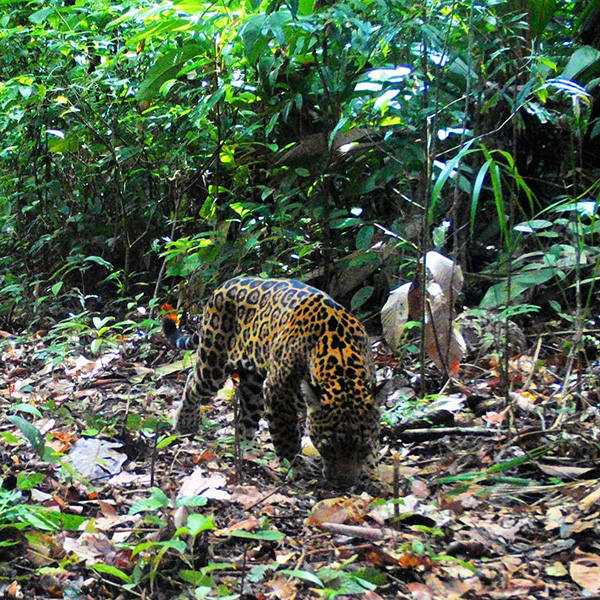
A leopard walking through a jungle filled with lots of leaves.

The area is home to animals such as spider monkeys, capuchins, squirrel monkeys and howler monkeys. There are also anteaters, coatis, jaguars, ocelots, oncillas, frogs, and more. There is also a wide variety of bird species, including the scarlet macaw, toucans, hummingbirds, woodpeckers and trogons.

Where the forest meets the sea in the river deltas, it forms impressive mangrove forests that are breeding grounds for many species, including dolphins, manta rays, eels, and fish that leap out of the water – not to mention the possibility of observing the arrival of the humpback whales with their calves between the months of July and October.

If you’re wondering when the best time is to plan your visit, you should remember that its dry season lasts from December to April, but precipitation varies from month to month. Its temperature generally stays between 25°C and 30°C. Remember that the area is very wet, meaning that you should pack comfortable and cool clothing. Some of the activities for you to tryout here include surfing its world-class breaks, sport fishing, kayaking, snorkeling, horseback riding, and more.

Although the Golfo Dulce Forest Reserve does not have public facilities, it is open to visitors. It is recommended that you choose a guided experience with local tour operators.

reserva golfo dulce

Entry fees: Costa Ricans: ₡800 Foreigners: $10

Hours of operation: Seven days a week from 8:00 a.m. to 4:00 p.m.

Location: You can choose to travel by vehicle or by bus to the region. The bus route from San José to Golfito takes about 8 hours, and from Golfito you can drive or take another bus to the Golfo Dulce Forest Reserve. You can also take a domestic flight to the Puerto Jiménez or Golfito airports.

Telephone number of the Osa Conservation Area (ACOSA): +(506) 2775-1210

E-mail: acosa.info@sinac.go.cr

Without a doubt, our country’s southern region is full of natural riches and spots that are worth exploring, one of which is the Golfo Dulce Reserve. It was created to protect the forested lowlands that surround the gulf.

Are you looking for some sun and relaxation but don’t want to travel too far?

Sometimes all we need is to head somewhere close by for a one-day getaway: we can be home the same day, there’s no need to drive too much, and it’s friendlier on the wallet. Here are six options for that quick weekend getaway you’ve been needing.

Peñón de Guacalillo

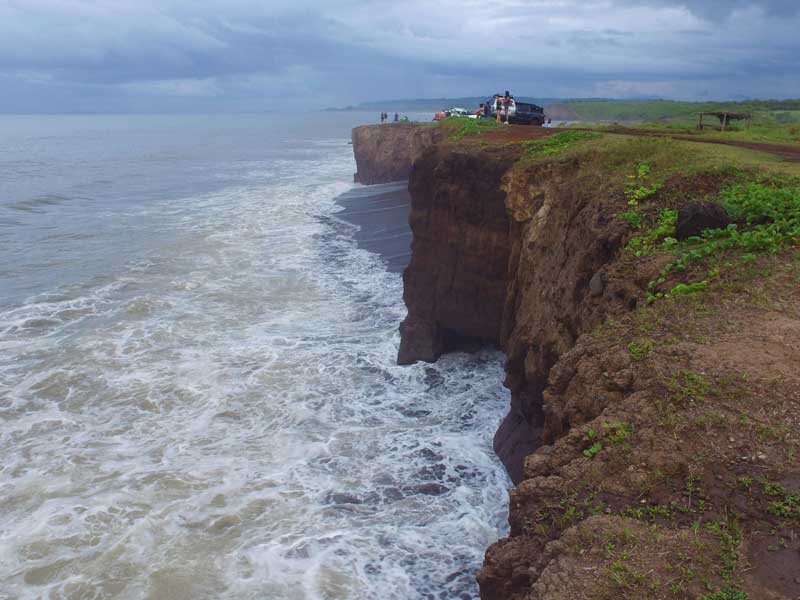
If you’ve been on Costa Rican Instagram, you’ve surely seen a few (thousand) sunset photos from this spot, or people lounging on chairs and admiring the view. This lookout is a hit among Ticos and is a great place to spend some time with family or friends. If you still haven’t seen it for yourself, come on and enjoy the area.

Playa Blanca, Puntarenas

This beach is near Punta Morales, in Puntarenas. The surf isn’t too strong here, and there’s parking just in front of the beach. There are also restaurant options if you’d like to have lunch nearby.

Playa Mantas, Puntarenas

This beach is right next to Playa Blanca in Punta Leona, and is one of the closest beaches to San José. It has gray sand and calm surf, along with trees that provide the perfect shade for relaxing, reading a good book, or having a picnic with friends.

Bajamar Caves

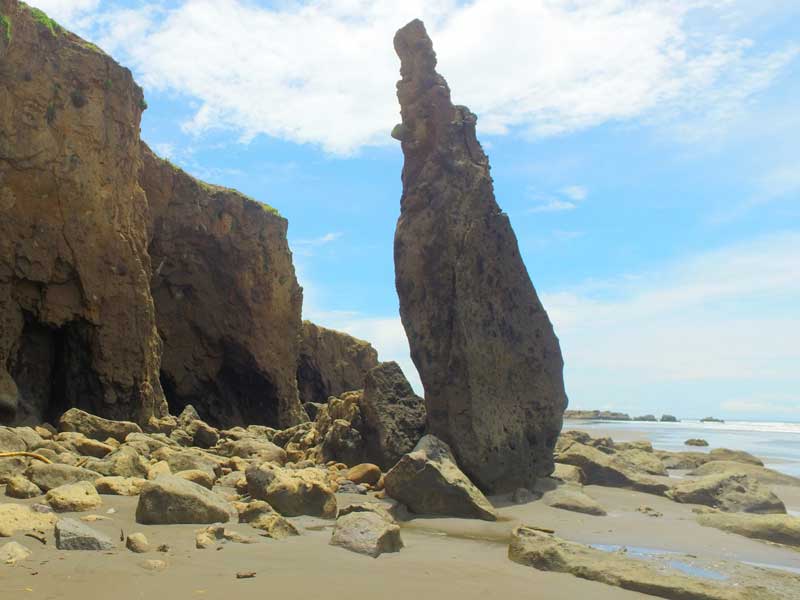
Bajamar is a hidden gem in the Garabito canton, near Peñón de Guacalillo. It’s located on the hill of the same name, Bajamar. These caves are only accessible at low tide, so you’ll have to get there early and be patient. Remember to follow local safety precautions and speak with locals to know what’s best. Vehicle access is not a problem during the dry season, but during the rainy season a 4x4 vehicle is recommended.

Playa Biesanz

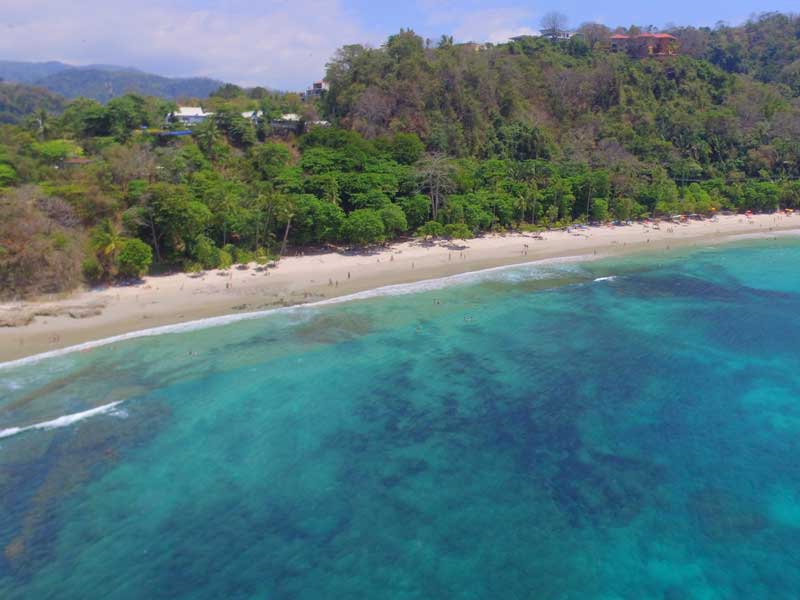
This beach is located inside Manuel Antonio National Park, with plenty of lodging options nearby along with a variety of restaurants. It’s a perfect place for spending a weekend with your family, since the waves are nice and calm, perfect for children to play in – but make sure not to let them out of your sight! The water is crystal-clear, not to mention the natural beauty of the surrounding park.

Playa Esterillos Oeste

This beach is another option to keep in mind if you’re looking for a beach near San José. Also known as Sector la Sirena due to the statue of a mermaid (called a sirena in Spanish) sitting on the rocks looking at the sea. The cast bronze statue was made by Puriscal sculptor Albino Valverde. Esterillos offers a spacious beach with heavy waves, making it a destination for surfers. There is a nearby campground and there are plenty of tours, restaurants and accommodations in the area.

If you’re staying home on a lazy Sunday, why not explore one of these options?

Are you looking for some sun and relaxation but don’t want to travel too far? Here are six options for that quick weekend getaway you’ve been needing.

Cartago has always been a great destination to get away from the hustle and bustle of the big city. We wanted to do a bit of hiking and so we headed towards one of the massifs located in the province, specifically in the Volcán Irazú National Park.

We left downtown San José and drove for 51 km – it was a trip of about an hour and a half (see directions). When we got to Cartago – the Pacayas area, more specifically – we met several farmers working the land and others selling their products on the side of the highway. It’s an obligatory stop to purchase fruits, vegetables, a variety of cheeses and even flowers – all the better because we were supporting the local farmers.

We had just left the car when a group of coatis greeted us. They got up close to ask for food, but it’s important for visitors to know that giving animals food in the country’s national parks is forbidden.

Majestic views

The day was sunny, though it is normally quite cold at the peak (5-10°C) so it’s a good idea to bring warm clothing. It’s the highest volcano in Costa Rica at 3,432 meters (11,260 ft) above sea level. It has 5 craters, the largest of which measures 1.5 km (0.9 miles) in diameter and 300 m (985 ft) in height. Due to its position high in the Central Volcanic Range, it is a strategic point for telecommunications infrastructure, which is why several antennas can be seen at the peak for this purpose.

The path along its craters is truly invigorating – the paths are protected by security barriers that may not be crossed. The day we visited was quite cool with a clear sky. We recommend that you arrive early so that you’ll be just as lucky, as the peak often gets cloudy by midmorning. We were able to look down into the main crater and see the lake at the bottom, with spectacular sunflower tones of yellow and green.

In addition, there is the Playa Hermosa and Diego de la Haya craters, as well as the Sapper formation, which is the highest point on the mountain, from where you can see Costa Rica’s Pacific and Caribbean coasts.
In addition to information, visitor services include park rangers, trails, restrooms, a café and several natural lookouts.

Origin of the name

Irazú is derived from the language of the indigenous people who used to live in the area and means “peak of tremors and thunder” because of the several eruptions that the volcano has experienced over the course of its history.
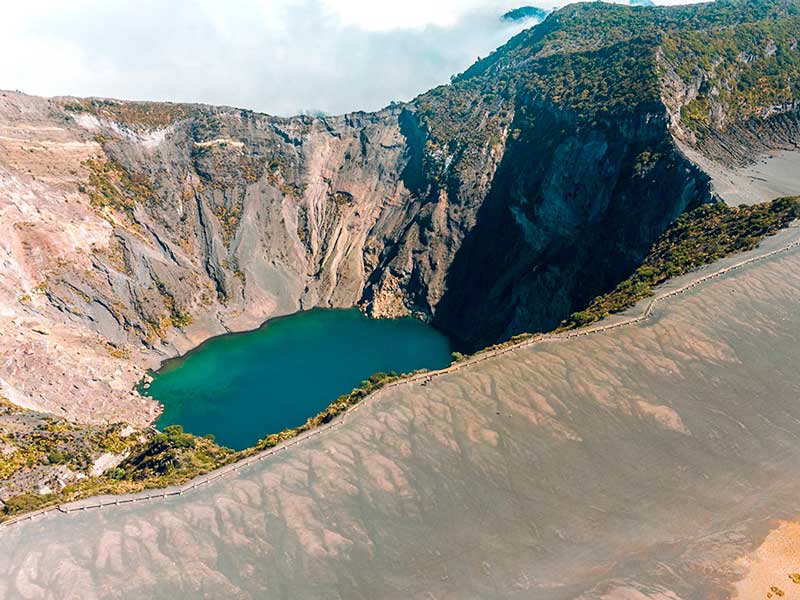
An aerial view of a mountain and a lake.

Volcanic activity

The first large recorded eruption occurred in 1723, which destroyed the city of Cartago, which at the time was the capital of Costa Rica, while also covering much of San José in ash. This activity was documented by Diego de la Haya, which is why one of the craters bears his name.

Another one of the most memorable eruptions occurred in 1963, right when the country was hosting the former US President, John F. Kennedy. An accumulation of volcanic materials in the Río Reventado waterway caused an avalanche that destroyed around 300 houses in the city of Taras de Cartago. The volcano remained active for two more years after that date, gushing lava in powerful explosions.

In 1994, a sudden explosion occurred on the northern wall of the main crater, which produced an avalanche that spilled down to the Río Sucio waterway, coming to a stop on the other side of the bridge over the river located on the Braulio Carrillo highway. Since then, the volcano has only exhibited volcanic activity on the northern wall of the main crater.

All of the volcanic activity has made the region particularly ideal for agriculture, since the soil is very fertile. Visitors here will see many farms dedicated to cultivating strawberries, potatoes, onions, exotic flowers and milk.

Volcanoes are unpredictable, but visiting Irazú is completely safe. If any eruption hazard is detected that would represent a risk for visitors to the volcano, the park would be evacuated with plenty of time to spare.

Volcán Irazú National Park

The Volcán Irazú National Park was created by Law No. 1917 on July 30, 1955. It was later expanded by Executive Order no. 26945-MINAE of August 22, 1988 to its current size of 2,000 hectares.

The park is comprised of the observation facilities that overlook the volcano and its craters, as well as the sector known as Prusia. There are facilities to enjoy a picnic with food and drink that you bring (alcoholic drinks are not allowed), as well as hiking trails.

Flora and fauna Around 25 km2 (9.7 sq. mi.) are protected, which are home to many interesting species of plants and animals.
The plant growth is a sight to behold: it is arid at first glance, and looks like the moon. Tall pines are present further down, as well as the large leaves of “poor man’s umbrella”.

There are very few animals due to the volcanic activity. However, visitors can see robins, owls, hummingbirds, porcupines, rabbits, agoutis, coyotes and foxes in the area.

The Prusia area has 16 km of trails where you can enjoy a moment of relaxation in the middle of the natural surroundings. The zone is visited often by fitness buffs or trail-runners.

Various rivers and creeks have their source in the park, including the Reventazón, Sarapiquí, Sucio and Toro Amarillo.

Hours of operation Every day from 8:00 a.m. to 3:30 p.m. Includes holidays.

Services

  • In the Cráteres section there is a parking lot, café, restrooms with access for persons with disabilities, an information kiosk located on the path to the main lookout, as well as three roofed picnic areas.
  • The Prusia section contains the El Roble, Micaela, La Gruta, Chiverrales, Cabeza de Vaca, El Ahorcado, El Puma and Los Abuelos trails, as well as picnic areas, restrooms and running water.

Contact people:

  • Cráteres section: 2200-5025
  • Prusia section: 2200-4422

How do we get there?

By car

  • Cráteres section: From San José, take the Florencio del Castillo highway and follow signage for Volcán Irazú (route 219). The volcano is 33 km (20 miles) north of Cartago.
  • Prusia section: The route is the same as for Volcán Irazú, except that once you reach the Catholic church of Potrero Cerrado, you will need to follow the highway for 2 km (1.3 miles), turn left and keep going for 4 km (2.5 miles).

By bus

  • The first option is a bus that leaves every day in front of Hotel Costa Rica in San José at 8:00 a.m. with a stop in Cartago. It stops on the east side of the Antiguo Cuartel (Tierra Blanca stop) around 8:40 a.m. and reaches the volcano around 10:00 a.m. It returns at 12:30 p.m.
  • The second bus leaves Cartago at 12:00 p.m. from the Tierra Blanca stop. It reaches Irazú at 1:10 p.m. and returns at 2:55 p.m.
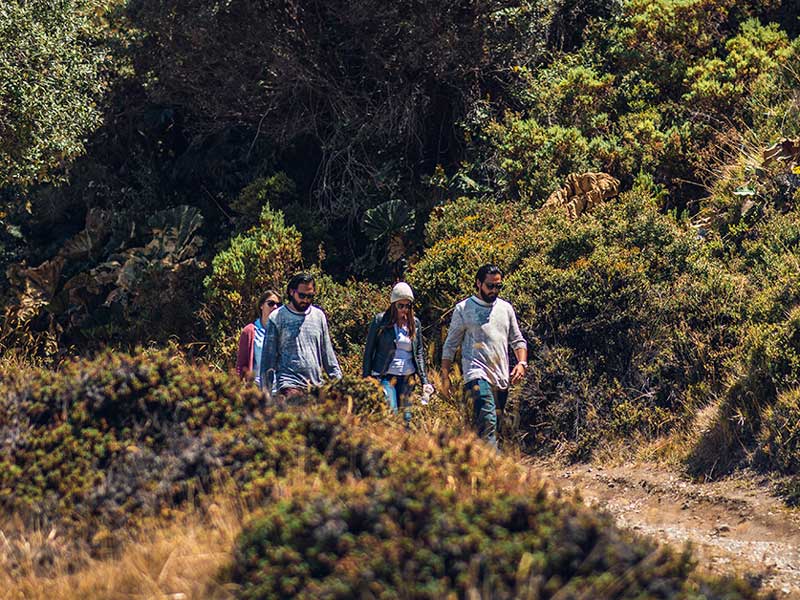
A group of people walking down a dirt road.

Recommendations

  • Use comfortable clothing and closed-toe shoes for hikes. On sunny days you should use a hat and sunscreen; on cloudy days use a jacket or raincoat.
  • Since it is an area with volcanic activity, it is important that you pay attention to the regulations put in place by park rangers to protect you in the event of an emergency.
  • Remember that on days with high attendance, you will probably have to wait in line to use the restrooms.
  • Weather conditions at the peak of Volcán Irazú change rapidly, meaning that there is no guarantee that you will be able to see the craters. Check the weather conditions before your visit.
  • In the picnic areas, be careful around raccoons and agoutis that try to rob food.

It is important to be aware that, like other protected wildlife areas, the following is not allowed in Volcán Irazú National Park:

  • Entering in a state of drunkenness or after having taken drugs.
  • Entering with domestic animals or pets.
  • Removing rocks, plants or other natural resources from the wilderness area.
  • Leaving the trails or areas designed for public use.
  • Smoking (Law 9028).
  • Littering.
  • Feeding wildlife.
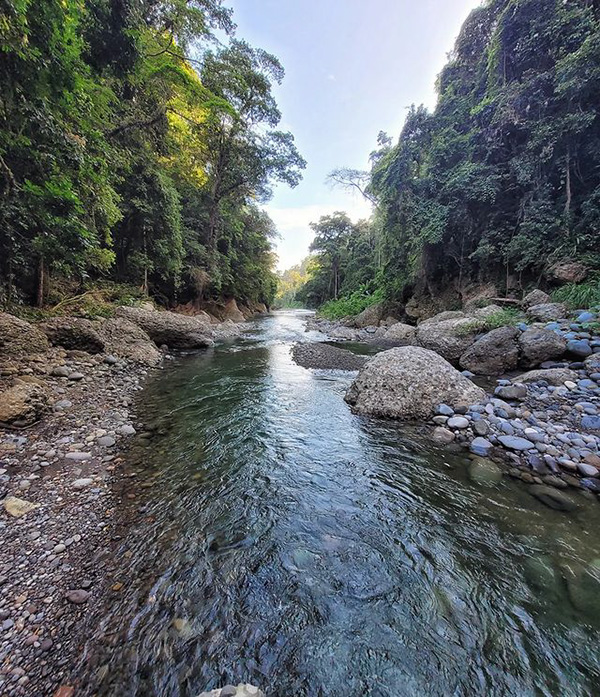
Cartago has always been a great destination to get away from the hustle and bustle of the big city. We wanted to do a bit of hiking and so we headed towards one of the massifs located in the province, specifically in the Volcán Irazú National Park.

For a lot of us, when we think about Grecia, what comes to mind are images of coffee production, sugarcane, its famous car sales and the temple of Nuestra Señora de las Mercedes, which is a part of the architectural heritage of the country. But the truth is Grecia has much more to offer.

We set off towards this region in Alajuela to discover more in their neck of the woods. We made a stop at a cafe downtown to have a delicious coffee accompanied by a gallo pinto that’s worth coming back for. After refueling our bodies, we continued on our way to San Miguel Arriba de Grecia, where a farm with a true paradise within it was waiting for us.

A dirt path in the middle of a forest.

You can camp on the farm

About 3 km east of the Catholic church, San Miguel de Grecia is the entrance to the farm. It’s 3 hectares in size, and in addition to having coffee, livestock and vegetables, it also features the wonderful Paradise Waterfall, which is fed by Vigía river.

The cars can’t make it down to the waterfall, so you should leave it near the road. Once we got our packs on our backs, we went down about 300 meters to get to the picnic area and to a delightful pool with a slide. Then we took a bushy path for about 100 meters and the waterfall greeted us warmly.
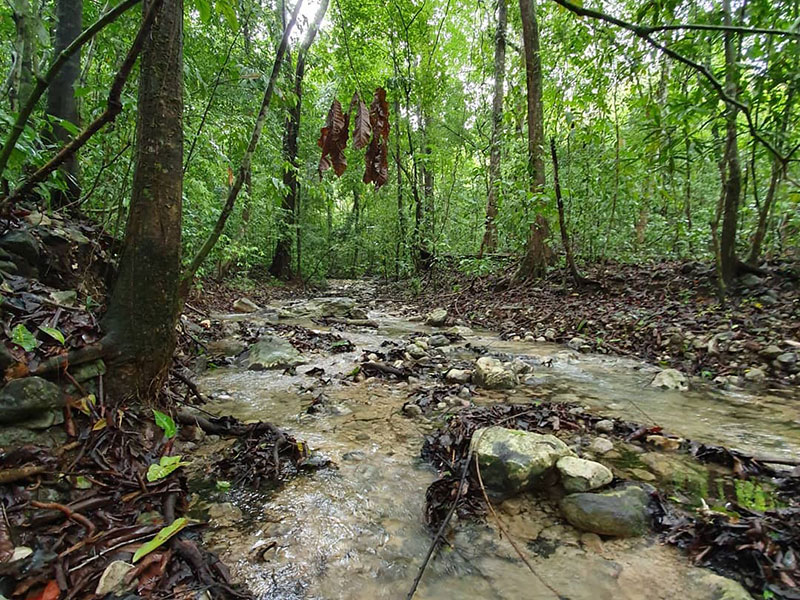
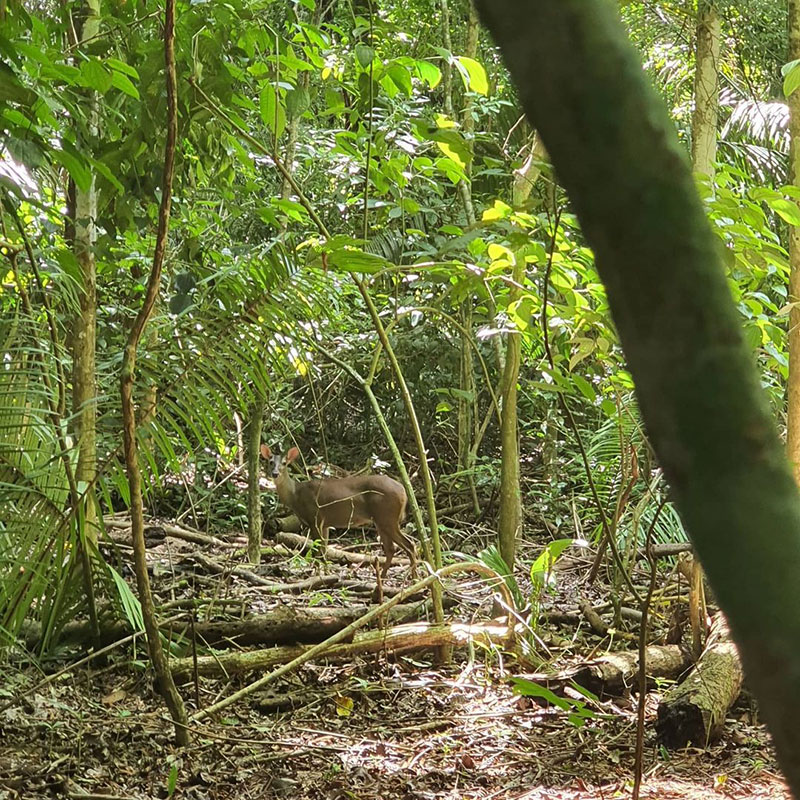
The beauty of this tour is that the path is very accessible for the whole family, and they have small tables in front of the waterfall where you can have lunch on your day off or weekend. If you prefer to camp, you also have that option here, so get ready and visit soon.

This is a getaway for those who are looking for fresh air surrounded by nature, and a trip not too far from the capital.

A man standing in a river next to a waterfall.

65 invigorating meters

The falls are approximately 65 meters high and 1 meter deep. Because of its impressive height, it looks like the water disperses as it falls, forming a white curtain.

Grecia conjures images of coffee production, sugarcane, its famous car sales and the temple of Nuestra Señora de las Mercedes, which is a part of the architectural heritage of the country. But the truth is Grecia has much more to offer.

A river running through a lush green forest.

The Caribbean is full of riches, one of which is the Hitoy-Cerere Biological Reserve, a treasured secret in the province of Limón. Here, you can see exuberant, unspoiled tropical forests with an incredible variety of vegetation and rivers with numerous waterfalls.

It is located approximately 60 km south of Puerto Limón and to the southwest of Valle de la Estrella. The indigenous reserves of Talamanca, Tayni and Telire are found close by.

If you’re wondering about the origin of the name, there’s a story behind it: the word hitoy comes from the indigenous Bribri language, meaning “wool,” while cerere means “clean water.” Literally, it is the place of clean water by the woolly moss. UNESCO declared this reserve to be a World Heritage Site in 1993, and it belongs to La Amistad-Caribe Conservation Area.


A river running through a lush green forest.

Over 40 species of mammals live in Hitoy-Cerere, including monkeys, deer, possums, squirrels, agoutis and jaguars. You may even encounter endangered species on your visit, such as the silky anteater, the three-toed sloth, ocelots, tapirs and river otters. In addition, the reserve provides habitat to over 300 species of birds. Birdwatchers have a chance of spotting a spectacled owl, Montezuma oropendula, kingfisher, toucans and vultures.

Some of the amphibians, insects and reptiles you might see in the reserve include scarab beetles, bullet ants, spiders, metallic-colored wasps, butterflies and dragonflies. It is also home to frogs and toads, including the dark poison dart frog, snakes, lizards, iguanas and geckoes. The reserve has a rich flora as well: trees covered with moss, orchids, lichens, ferns and epiphytes are a common sight. Palms and wild vegetables also grow here, while strong vines can be found hanging from trees.

To get to the Hitoy-Cerere Biological Reserve from San José, take the main highway from San José to Limón, then turn south toward Cahuita. The reserve is not far from the town. In the reserve, you can also find guide services.

It’s best to visit during the dry season between February and April, since the conditions on the trails are better and you can take in more of its biodiversity.

Hours of operation: Seven days a week from 8:00 a.m. to 4:00 p.m.

Admission: Costa Ricans: ₡1000 Foreigners: $5

More information: 2206 5516

Services offered in the reserve: assistance to users, trails, restrooms, parking area and visitor information.

The Caribbean is full of riches, one of which is the Hitoy-Cerere Biological Reserve, a treasured secret in the province of Limón. Here, you can see exuberant, unspoiled tropical forests with an incredible variety of vegetation and rivers with numerous waterfalls.

A scorpion bug crawling on a green leaf.

If you like nature, walks in the forest and spotting animals, this should be your next destination.

Located 3 km to the south of the main town of Sarapiquí, Puerto Viejo, La Selva Biological Station is an incredible center for research into neotropical biology in the province of Heredia. It is situated in the Central Volcanic Cordillera and borders Braulio Carrillo National Park.

Tourists visit the station for its bird tour, which begins around 5:45 a.m. and the night tour in which they can spot animals like snakes, frogs and more.

The station also has accommodations and a restaurant where you can spend a weekend surrounded by nature.

A monkey sitting on top of a tree branch.

La Selva was established in 1954 by Dr. Leslie Holdridge, who dedicated his farm to forest research with the aim of improving natural resource management. Later, in 1968, the property was transferred to the Organization for Tropical Studies (OET), who founded the station and private biological reserve.

Every year, the station hosts over 250 scientists and researchers from 26 countries. It offers tourists and nature lovers a unique opportunity to learn and enjoy this incredible ecosystem and the biological station, a world-renowned research facility.

The reserve stands out for its species richness, with over 2,077 species of plants species, 125 of mammals (72 of bats alone), 470 of birds, 48 of amphibians, 87 of reptiles, 45 of freshwater fish and tens of thousands of species of insects, arachnids and other arthropods. It’s truly a living wonder.

The Academic Center includes a conference room, four classrooms, four laboratories and temporary offices for visiting academics.

estacion biologica la selva

The center has an extensive network of paved and unpaved trails (61 km), which provides convenient access to a wide variety of terrestrial and aquatic habitats.

If you’d like to choose from even more activities in and around Sarapiquí, we recommend the article below, which is sure to get you excited about everything there is to do in this canton of Heredia province.

15 tours to experience in Sarapiquí

Additional information

  • Tel: 25115100 / 88574999
  • Email: info@tropicalstudies.org
  • Facebook: Estación Biológica La Selva
  • Location: Google Maps
  • Admission fee for Costa Rican nationals: $28 for adults and $17 for children (consists of 3-hour tour).
  • Hours of operation: 8:00 a.m. to 11:00 a.m. / 1:30 p.m. to 4:30 p.m.
  • Price of lunch: $13.
  • Price of bird or night tour: $60
  • Price of accommodations: $68 per person, includes hiking and 3 meals

*Visits require prior booking.

If you like nature, walks in the forest and spotting animals, this should be your next destination. Located 3 km to the south of the main town of Sarapiquí, Puerto Viejo, La Selva Biological Station is an incredible center for research into neotropical biology in the province of Heredia.

The refuge is located near Puerto Soley, in the province of Guanacaste. Welcome to a 25-hectare island that’s ready to surprise you with its flora, fauna and stunning beaches.  The island is 81 m long and is located 1.5 km from Punta Descartes.

It was created in 1981 to protect the large seabird population, and is part of Santa Rosa National Park, which is about 1 hour away. This peaceful island is located in Bahía Salinas on the country’s Pacific coast, close to the border with Nicaragua.

Image

If birdwatching is your thing, you’ll be able to spot pelicans during the birds’ nesting season in January and February. Frigatebirds can be found here from November to June, during their lengthy stay along our shores. The animals you can catch a glimpse of here include snails, clams, lizards, and a variety of marine species.

Isla Bolaños is the only place in the Guanacaste Conservation area where the American oystercatcher is known to nest. The island is also a nesting site for the magnificent frigatebird and is one of the few places where brown pelicans nest. Its importance for these bird species led to its designation as a wildlife refuge.

The plant life in the area is typical of the tropical dry forest, and most of the terrain is challenging. The island is made up of layers of rocks that were formed over a period of more than 40 million years.

A beach that has a bunch of trees on it.

Visitors to the island can also find white sand beaches, clear aquamarine water, and calm waves. At low tide, it’s common to see large populations of crabs.

If you’re thinking of visiting on your own, you can make the trip on one of the boats that go around the island with a permit from the Santa Rosa National Park. There are no facilities inside the refuge, since the aim of the area is to protect the species located there.

Access to the refuge is from Puerto Soley, which is located 3 km from the island. The best option is to opt for a guided tour, which will ensure that you keep your impact on the island’s fauna to a minimum.

Did you already know about this place? If you haven’t done it yet, put it down on your list of places to discover. Our country has so many surprises in store! So let’s go and #VamosATuristear.

More information: Guanacaste Conservation Area.

WhatsApp: 8886-9510

Santa Rosa National Park: 2666-5051

The refuge is located near Puerto Soley, in the province of Guanacaste. Welcome to a 25-hectare island that’s ready to surprise you with its flora, fauna and stunning beaches.  The island is 81 m long and is located 1.5 km from Punta Descartes.

It was created in 1981 to protect the large seabird population, and is part of Santa Rosa National Park, which is about 1 hour away. This peaceful island is located in Bahía Salinas on the country’s Pacific coast, close to the border with Nicaragua.

We decided to explore Alajuela’s second canton, San Ramón, looking for the reason why so many people have been posting incredible photos from this part of the country.

Naturally, we suspected that it was because of the one of the region’s highest points, so we put on comfortable clothing and headed off.

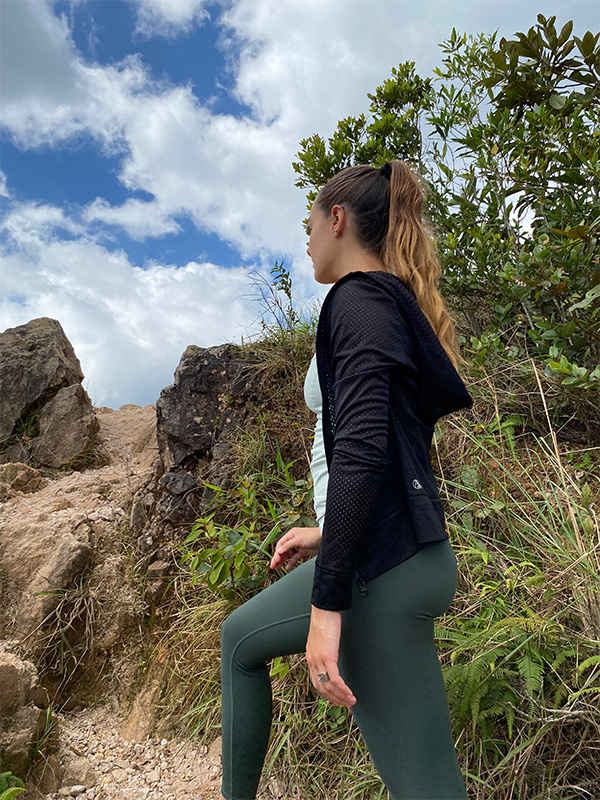
A woman in a black top and green leggings

If you want to visit, you just need a 4x4 vehicle, friends who are ready for an adventure and plenty of enthusiasm, since there is no admission fee. We didn’t see too many cars on the way there, so it’s best if you go with someone else or in a group.

The reason we mention the 4x4 vehicle is because the road is unpaved for the last 20 minutes before getting to the mountain, making the drive a little more difficult. It’s easy to figure out the route, just enter “Cerro Tinajitas” into Waze and it will guide you. Basically, you’ll head towards San Ramón and, once you’re there, head towards Río Jesús for 10 minutes and then take a left towards this beautiful mountain.

Once you’ve reached, note that there is no separate parking area for you to leave your vehicle, though there is space to park by the road, as the place is fairly remote and full of nature.

The hike is 400 m in length and there are some steep and narrow sections that require some care, though it’s fairly easy overall.

If you’re thinking of camping, we don’t recommend it as there are no services nearby and, as we mentioned, it’s a very remote area without many people.

By the way, you can feel free to bring your pets, and they’re sure to love being able to run around freely.

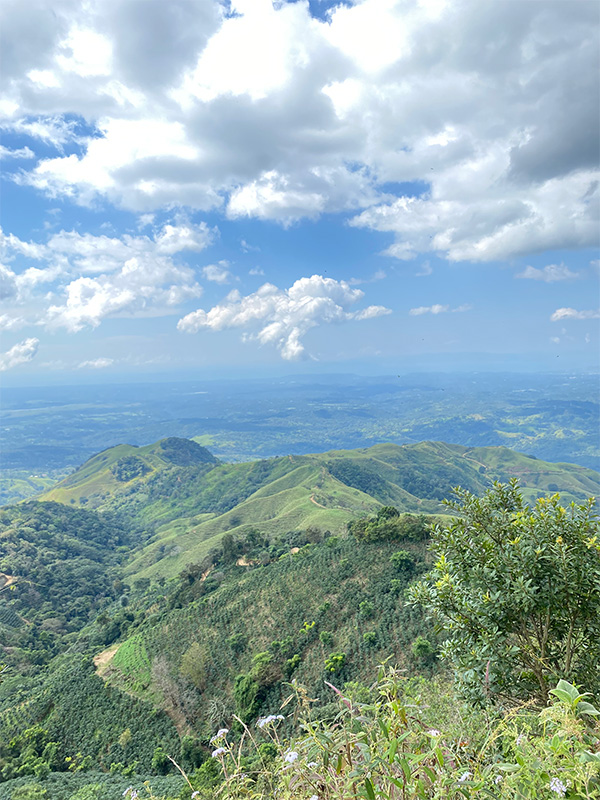
A scenic view of a mountain range with clouds in the sky.

Once you’re atop the mountain, you’ll feel the mountain’s cool breeze as you’re treated to an incredible view that reaches as far as the cantons of Esparza, San Mateo and even as far as the city of Puntarenas.

Although you can visit anytime, many people like to go to catch the sunrise from the summit, sitting down and having a bite to eat as the sky is covered in color.

A real marvel!

Location: https://goo.gl/maps/S15tSZ5GRpQ2fXtH9

Admission: free.

Pets: yes.

Difficulty: easy.

Vehicle: 4x4

Distance: 400 m.

What should I bring with me? comfortable clothing, sunscreen, insect repellent, hydration and snacks.

Explore Alajuela’s second canton, San Ramón, to discover why so many people have been posting incredible photos from this part of the country.

This beautiful reserve is situated about 7 km from the town center of Santa Elena de Monteverde. 

The Santa Elena Cloud Forest is one of those destinations where you can escape your routine and connect with nature. Although the reserve is smaller than the Monteverde Biological Reserve, both serve the same goal of preserving the forest and welcoming more tourists to see it for themselves.

A dirt path in the middle of a lush green forest.

The clouds that surround the forest form a constant fog that covers everything, caused by the reserve’s elevation of 1,600 meters above sea level. The cool mountain temperatures mean that the forest is always humid, making it an ideal ecosystem for many species of orchids and ferns.

The reserve is rich in fauna as well, providing habitat for wild cats like pumas, jaguarundis, jaguars, and others. You’ll also have the chance to see sloths, spider monkeys, snakes and species of frogs. There is also a vast array of birds: in fact, the reserve is considered to be one of the best places for birdwatching, with an estimated 500 species of birds in the area. You may even spot the majestic quetzal here.

monteverde extreme

You can also enjoy other activities such as hiking, hanging bridges, orchid gardens and even tours of coffee farms.

The refuge has three main lookouts: the Observation Deck, the Observation Tower, and the Caño Negro Lookout.

The Observation Tower offers views of three volcanoes: Tenorio, Miravalles and Rincón de la Vieja. On clear days, you can even see the Platanar Volcano, Cerro Congo, Lake Nicaragua, Lake Arenal, Cerro Chato and Cerro Pelado.

If you would like to go on a guided hike, we recommend that you make your reservations one day in advance by calling 2645-5390. There is no need to reserve self-guided hikes, just show up at the park.

All the information you need

Single-use plastic (plastic bags, disposable water bottles, etc.) are not allowed in the park.

You also cannot bring any type of food onto the trails; food is only allowed in the restaurant.

The Santa Elena Cloud Forest is one of those destinations where you can escape your routine and connect with nature. Although the reserve is smaller than the Monteverde Biological Reserve, both serve the same goal of preserving the forest and welcoming more tourists to see it for themselves.

If you’re looking for a destination that’s full of nature and trails and close to the beach, you can’t pass up the chance to explore Cabo Blanco. Cabo Blanco Natural Reserve is located in the north of Puntarenas province on the Nicoya Peninsula, just to the south of Montezuma. It protects 1,269 hectares of land area and 1,790 of marine territory.

An important chapter in its history came in 1963, when Olof Wessberg and Karen Morgenson had the vision of creating the country’s first project to restore deforested areas. They were called to action by the massive deforestation in the Nicoya Peninsula that occurred in the mid-20th century. The project went on to become a natural reserve. Currently, it is part of the Tempisque Conservation Area.

Cabo Blanco Absolute Natural Reserve

Part of its commitment to conservation means limiting the number of visitors, with only 40 tourists allowed to enter per day. Reservations are required to ensure that you’ll be able to visit the refuge. Camping is also not allowed on Mondays and Tuesdays.

You’ll find that the forest has once again covered the whole area here, making it a perfect spot for hiking. It has 3 trails: a circular route that’s 2 km long, a 1 km trail specially designed for seniors and children, and a 10 km trail that goes all the way to Cabo Blanco.

Cabo Blanco Absolute Natural Reserve

The reserve protects several delicate ecosystems, including the Pacific lowland tropical forest. Around 119 plant species are present here. This also makes it a great place to learn about different species of animals such as monkeys, agoutis, peccaries, armadillos, squirrels, sloths, deer, raccoons and more.

It’s also a well-known attraction among birdwatchers, with species such as frigatebirds, gulls and pelicans.

Cabo Blanco Absolute Natural Reserve

Remember that if you visit Cabo Blanco Natural Reserve, you’ll also be close to several gorgeous beaches, including Montezuma, Mal País, Tambor, Carmen, Cuevas and Santa Teresa. In addition, the region offers a variety of activities such as surfing, snorkeling, golf, ziplining, horseback riding, ATV riding and more.

Contact: Cabo Blanco Absolute Natural Reserve Office: 2642-0093 / 2642-0096

Entry fees: Costa Ricans: ₡1600 – Foreigners: $12

Location: Take the ferry from Puntarenas to Paquera, head towards Montezuma, follow the coast until you reach Cabuya, and then follow the signs for the reserve (Sector Cabuya).

Ferry timetable: https://bit.ly/3z0VSXQ

If you’re looking for a destination that’s full of nature and trails and close to the beach, you can’t pass up the chance to explore Cabo Blanco.
Subscribe to Nature